The Price Tag Changed the Painting: What Nobody Tells You About Selling Your First Print
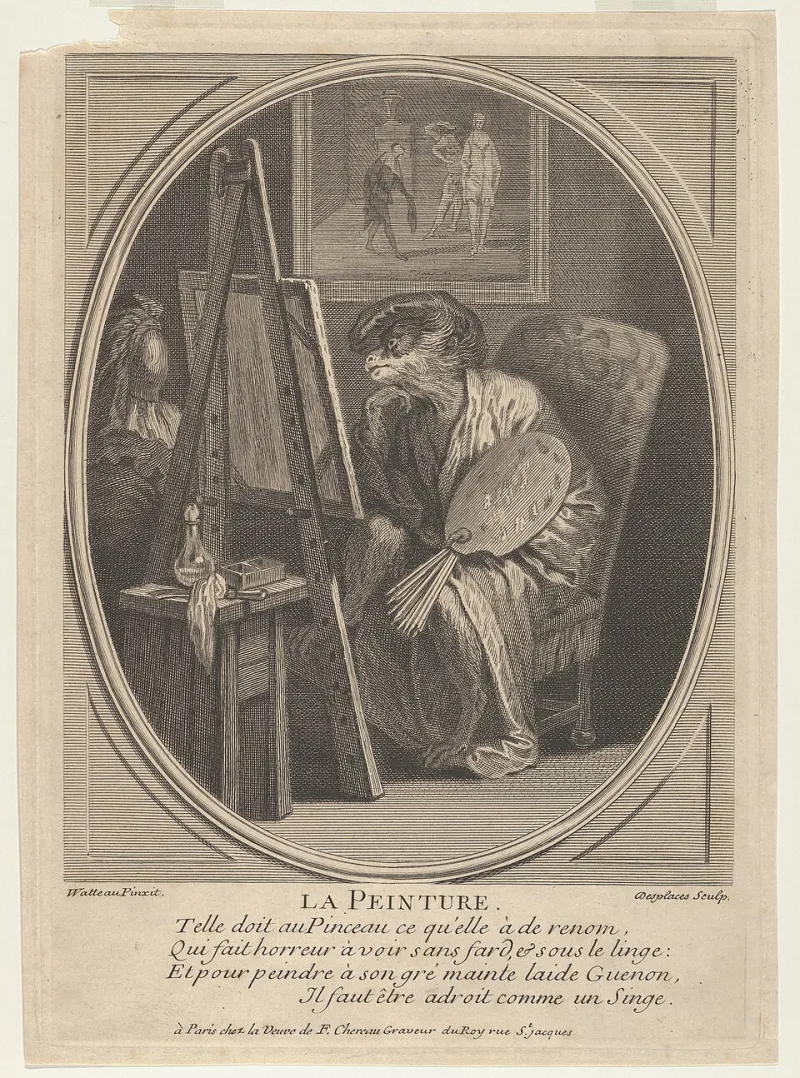
Photo: Jean-Antoine Watteau, CC0, via Wikimedia Commons
It was a Tuesday in March. I remember because I'd taken the day off work to set up my little online shop, and by lunchtime I'd sold exactly one art print — to a woman in Portland whose name I'll never know but whose order confirmation email I must have read twenty times.
Forty dollars. That's what I charged. Forty dollars for a piece I'd made on a Sunday afternoon while a pot of chili burned on the stove, a piece that until that morning had lived in a folder on my desktop labeled, embarrassingly, "stuff."
By Thursday, everything had changed. Not the art — the art was the same pixels it had always been. Everything else, though? Completely unrecognizable.
Everyone Became a Critic Overnight
Here's the thing nobody warned me about: the moment something has a price, people treat it like it has a comment section.
A guy I went to college with — someone I hadn't spoken to since 2016 — messaged me to say he "wouldn't personally hang that color combo, but you know, market to your audience." My aunt called to ask if I could "do something happier, maybe with a beach." A stranger on Instagram, who found my work through the shop link, felt strongly that the composition would be "way better in landscape."
I hadn't asked for any of this. I'd simply put a number next to a thing I loved.
And I get it — I do. When art is free, people experience it. When art costs money, people evaluate it. A price tag is an invitation to weigh in, because money makes people feel like stakeholders. It's the same reason everyone in your group chat becomes a GM when you mention you're buying a used car.
The Discount Squad Arrives
Then there were the friends. Wonderful friends. Loyal friends. Friends who wanted — gently, kindly, with a little wink — a discount.
"What's my friend price?" one texted, and I laughed, and then I sat there for an hour doing math I hated. Because here's the trap: if I gave her forty percent off, I was telling her the real price was a fiction. If I didn't, I was the guy who charges his friends full freight.
I ended up doing something I wish I'd done from day one: I made a flat, boring, no-drama policy. Twenty percent off for anyone who's ever slept on my couch, no exceptions, no negotiating, no guilt. I posted it in my stories like a restaurant posts its hours. It felt cold for about a week. Then it just felt like a business.
Grieving Something That's Still Right There
The strangest part wasn't the opinions or the haggling. It was this low-grade sadness I couldn't name for weeks.
That first print — the one I sold on a Tuesday — it had been pure before it was product. I made it for nobody. No brief, no deadline, no audience. Just a Sunday, some chili, and an idea. The second I sold it, I caught myself making different choices in the studio. Safer colors. Things that would "photograph well for the listing." I started asking my partner, "Would you buy this?" — a question that sounds reasonable and is actually poison.
The thing I loved had become a thing I was selling, and those are not the same object, even when they're identical.
A painter friend in Chicago put it perfectly over drinks: "Selling your work is like watching your kid get on the school bus. You know it's the whole point. You still cry a little."
What I Wish I'd Known Before Hitting Publish
If I could go back to that Tuesday, laptop open, cursor hovering over the button, here's what I'd tell myself:
Set the price before the audience exists. Decide what your work is worth when it's still yours alone. Prices set under the gaze of an audience always bend toward what feels sellable instead of what feels true.
Write your friend policy before your friends ask. You cannot think clearly about money and loyalty at the same time. One of them has to be decided in advance.
Keep a drawer for work that isn't for sale. Not everything you make needs a listing. Some pieces exist to keep the engine warm. Protect at least a little making that never touches the marketplace, or the marketplace will eventually eat all of it.
Purchase does not equal input. Buying a print means someone owns a print. It does not mean they've commissioned the next one. You can thank a customer and still ignore their suggestion about the beach.
Still Worth It
I'd be lying if I said the shop has only brought complications. There's a photo somewhere in my camera roll of that Portland woman's print hanging above what looks like a very cozy fireplace, and I have looked at it more times than I'd like to admit. Somebody put a thing I made on their wall. On purpose. With money.
The grief was real, but it turned out to be growing pains, not a death. The art survived the price tag. I just had to learn — slowly, imperfectly — which parts of the making were for sale and which parts never would be.
The chili, for the record, was ruined. Some things the marketplace can't save.