The Day My Studio Fit in a Backpack (and Why I've Been Chasing That Attic Feeling Ever Since)

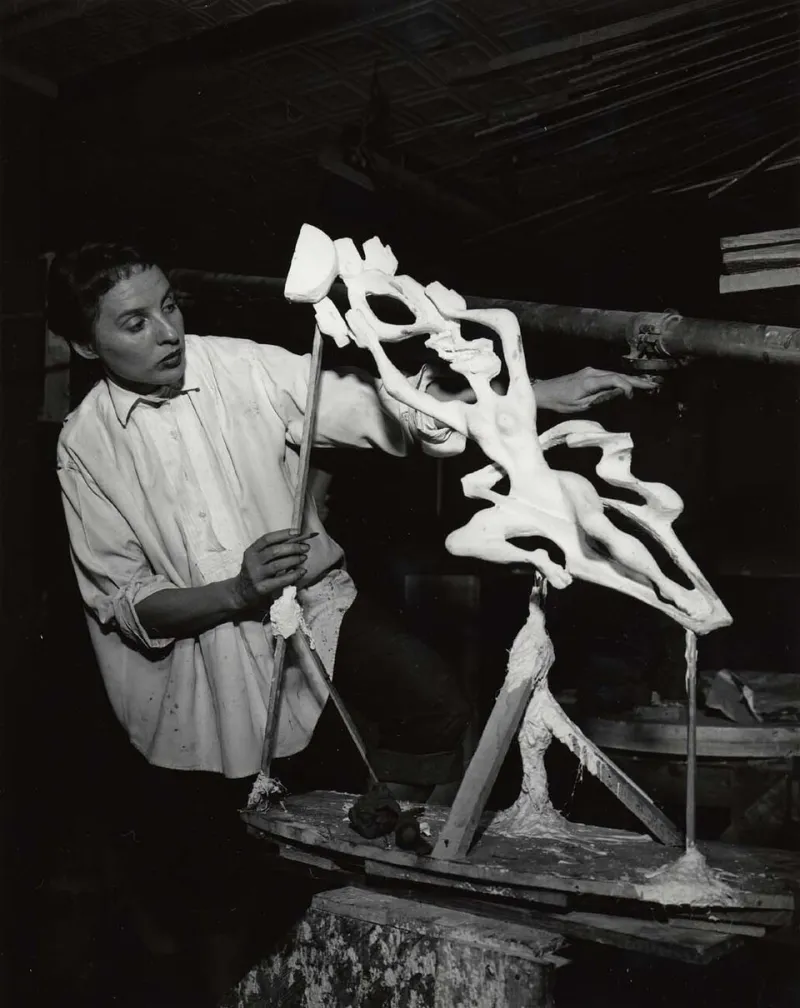
Photo: Matthew Petroff, CC BY-SA 3.0, via Wikimedia Commons
Ten years ago, my studio was a finished attic above a two-car garage in a rental house in Columbus, Ohio. It had one window that stuck, a radiator that clanked like a ghost with opinions, and a door that closed. That last part matters more than I realized at the time.
Today my studio is a folder on a laptop that also holds my invoices, my grocery list, and the group chat where my college friends send memes at 11 p.m. The studio goes where I go. Which sounds like freedom, and technically is. But lately I've been wondering what I traded for it.
The Door Was Doing More Work Than I Thought
When I had the attic, my brain had a switch. Walk up the stairs, and something shifted — the same way pulling into a parking garage used to signal "work" before remote everything. The commute was fifteen steps, but it was a commute.
Now the switch is a tab. And tabs don't close the way doors do.
I started noticing the leak a couple of years ago. I'd answer a client email at 10:40 p.m. because the laptop was right there. I'd get a half-formed idea in the shower and "just open the file for a second" and emerge two hours later, having made nothing and felt vaguely productive the whole time. My studio wasn't a place anymore. It was a low hum that followed me around the house.
Curious whether this was just me, I asked a few freelancers I trust.
Three Voices From the Haze
Dana, an illustrator in Portland: "I had a shared studio downtown for six years. When the rent doubled, I moved everything home and told myself it was a win. It was a win financially. But I stopped making personal work almost immediately. At the studio, I had a wall where I pinned experiments. At home, my experiments live in a folder called 'misc_final_v3.' That name tells you everything."
Marcus, a motion designer in Atlanta: "The cloud tools are incredible. I can pull up a project on my phone while waiting for barbecue. But 'incredible' and 'healthy' aren't the same word. My clients know I can respond from anywhere, so they expect me to respond from anywhere. The studio used to be my alibi. 'Sorry, can't — I'm at the studio.' Now my alibi is dead."
Priya, a writer and brand strategist in Chicago: "What I miss is the ritual. Sharpening pencils. Watering the plant on the windowsill. The little ceremony of arriving. On a screen, there's no arrival. You just... are already there, always. It's like living in the office lobby."
That last line stuck with me for weeks. Living in the lobby. Yes. Exactly that.
I'm Not Anti-Technology, I Promise
Here's where I have to be honest about the other side, because the nostalgia gets loud fast. The cloud gave me clients in Seattle and Austin while I lived in a city where I knew maybe six other freelancers. It gave me version history, which has saved my hide more times than I can count. It gave me the ability to keep working through an ice storm that shut down half of Ohio. The attic couldn't do any of that.
The problem was never the tools. The problem is that I let the tools eat the boundaries instead of building new ones. A browser-based studio isn't inherently worse than a physical one. It's just that nobody hands you a door with it. You have to build the door yourself, and most of us never do.
Rebuilding the Door: What's Actually Working
After that round of conversations, I ran some experiments on myself. Six months of trial and error. Here's what survived:
The fake commute. I walk around the block before I start work and when I stop. Fifteen minutes, rain or shine. It sounds almost insultingly simple, but it gives my brain the arrival-and-departure it's been starving for. I borrowed this from a friend in Denver who swears by it, and she was right.
One browser profile for work, one for life. This is the closest thing I've found to a door. Work profile opens with my project files and nothing else. Personal profile opens with everything else. When I close the work profile, the studio is "closed" — the tab equivalent of locking up and flicking off the lights.
A physical object that means "studio." Dana's pinned wall inspired this one. Mine is a cheap corkboard where anything experimental goes up by hand. If it's on the board, it's play. The board doesn't sync. It doesn't have a search function. It just sits there, being a place.
An alibi I can actually use. Marcus's dead alibi problem is real, so I rebuilt one. My email signature and my client onboarding doc both state my response window: weekdays, 9 to 5 Central. I don't say I'm "at the studio." I say I'm "outside working hours." It's not as romantic. It works almost as well.
One no-screen day a week. I stole this from my own earlier experiment in unscheduled making, and it's the hardest habit on the list and the one I'd defend hardest. Sundays, the laptop stays shut. I sketch, I read, I rewatch too much of the same shows. The ideas that show up on Monday are almost always better for it.
The Studio Is Where the Boundary Is
I don't miss the attic as much as I thought I would, once I dug into why. What I miss is the structure it imposed — the arrival, the door, the lights-off moment. None of that requires a physical room. It requires intention, which is harder to buy than rent but a lot cheaper.
My studio now lives in a browser, and that's fine. But I've stopped pretending the browser will draw its own edges. Somebody has to build the door. Might as well be me.
The radiator still clanks in my memory, though. Some things you don't get back, and honestly, I don't need them. I just need the walk around the block, the corkboard, and a profile I know how to close.