I Let a Stranger Watch Me Work, and It Fixed Something I Didn't Know Was Broken
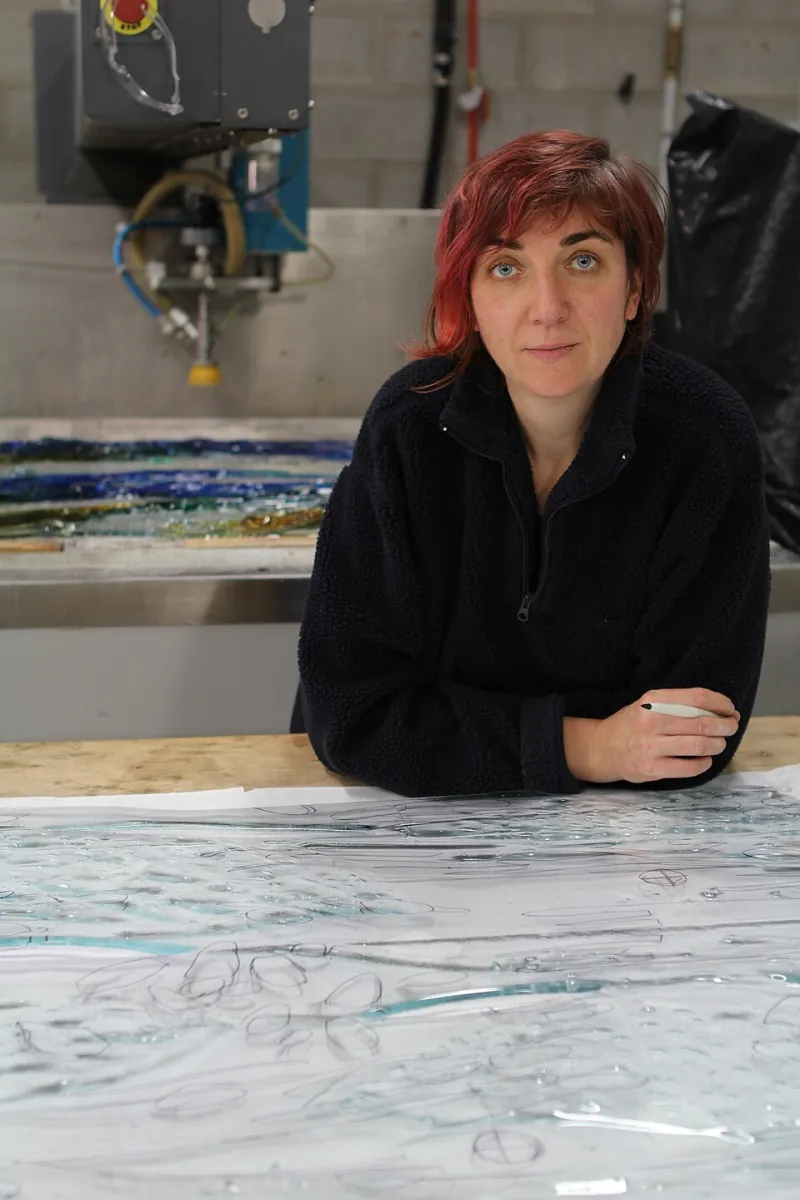
Photo: Victoria Balva, CC BY-SA 4.0, via Wikimedia Commons
The first time it happened, I almost cancelled. A woman named Deb — a retired art teacher from two towns over who'd signed up through a local newsletter — was going to sit in my studio for two hours while I worked. No instruction, no portfolio review, nothing to sell her. She was just going to watch.
I paced around the night before like I was hosting a dinner party for my own execution. What if I stalled? What if my process turned out to be embarrassing? What if she saw me check my phone fourteen times and Google something I should already know?
She showed up with a thermos of coffee and a paperback she promised not to read. And honestly? It changed how I work.
The Loneliness Nobody Puts on the Invoice
Freelance creative work in America is weirdly isolating in a way we don't talk about enough. We traded the agency's bad lighting and worse coffee for home studios, and most of us got exactly what we asked for: silence. Days where the only person who says your name out loud is the person at the drive-thru window.
I'd been running my practice solo for years. The work was fine. The clients were fine. But I'd noticed something creeping in — a kind of low-stakes dishonesty with myself. I'd call a morning 'worked' when I'd really spent it reorganizing brushes. Nobody knew the difference. Nobody was keeping score except me, and I was an increasingly lenient referee.
The idea for a studio guest came from an offhand comment at a gallery opening in Portland. An old classmate mentioned her grad program had a tradition of open work sessions — not critiques, not shows, just people existing in the same room while art got made. I stole the idea and stripped it down further.
How the Tuesday Thing Actually Works
The structure is simple, and I think the simplicity is why it stuck.
One guest, two hours, once a week. I post a slot on a rotating basis — sometimes a fellow illustrator, sometimes a friend's curious spouse, once a high school student who found me through a zine fair. They don't pay. They don't help. They sit in a chair near the window with whatever they brought to occupy their hands.
Ground rules get stated up front. No feedback unless I ask. No photos of work in progress. No touching anything. They're a witness, not a consultant — and honestly, the 'no feedback' rule is the whole ballgame. The moment someone starts directing, the session becomes a performance for them. I want the opposite: a presence, not an audience.
There's a protected drawer. Not everything is on view. Client work under NDA stays shut away. Personal projects that are too tender — the ones still in their chrysalis — go in a flat file marked with a piece of blue tape. Deb learned to read the blue tape fast. 'Closed today?' she'd ask, and move on without a flicker of curiosity. That respect did more for my trust in the arrangement than any contract could.
What a Witness Actually Changes
Here's the thing I did not expect: I became more honest, not more performative.
I assumed an observer would push me toward showing off — toward the impressive, photogenic version of working. Instead, the opposite happened. Because Deb wasn't evaluating anything, I stopped performing even for myself. I let myself struggle out loud. I'd hit a wall at 10:40 and instead of quietly scrolling to make it look like a break, I'd mutter 'this corner is wrong' and actually fix it.
A witness turns drift into duration. It's the same physics as a gym partner or a library study session — you'll sit through the boring middle of something when another human is in the room. My Tuesday output is measurably better than my Friday output, and it's not because Tuesdays are magic.
There's also a subtler shift: I narrate less in my head. Working alone, part of your brain is always writing the eventual caption — the Instagram post, the client email, the story you'll tell. With someone present who needs no story, that channel goes quiet and the actual work gets louder.
What to Share and What to Shield
If you're thinking about trying this, a few things I learned the slightly bruised way:
- Choose guests who owe you nothing. A stranger or acquaintance is better than a best friend. Friends bring their own history into the room, and you'll start managing their feelings instead of your work.
- Cap it at two hours. Long enough to get past the awkwardness, short enough that you don't restructure your day around them.
- Decide your blue tape before they arrive. Know what's off-limits so you're not making privacy decisions live, in front of someone.
- Debrief on their terms, not yours. I end every session with ten minutes of coffee where they can ask anything. Most ask about process, materials, how I price things. Once, a guest asked about my worst client, and I got a better story out of it than she got out of the studio.
- Keep it free. The moment money changes hands, it becomes a service and you become a host. This works because it's neither.
The Unexpected Accountant
I went into this wanting company. What I got was accountability I never asked for.
When you know someone's coming Tuesday, Monday afternoon gets honest. Not because they'd know if you slacked — Deb couldn't tell a productive session from a lazy one — but because you can no longer pretend. The witness doesn't judge the work. The witness just makes it impossible to lie about the week.
Three months in, I asked Deb why she kept coming back. She shrugged and said she liked watching someone take their own work seriously. I've thought about that sentence a lot since. Maybe that's the whole thing — we all need one person in the room who believes the work is worth watching, even the ugly parts. Especially the ugly parts.
If your studio has gone quiet in the wrong way, consider leaving a door cracked open. You don't need a program or an audience. You need one chair by the window, a thermos, and someone who promised not to read their paperback.