Paper Cuts and Better Clients: The Season I Quit My Website for a Xerox Machine
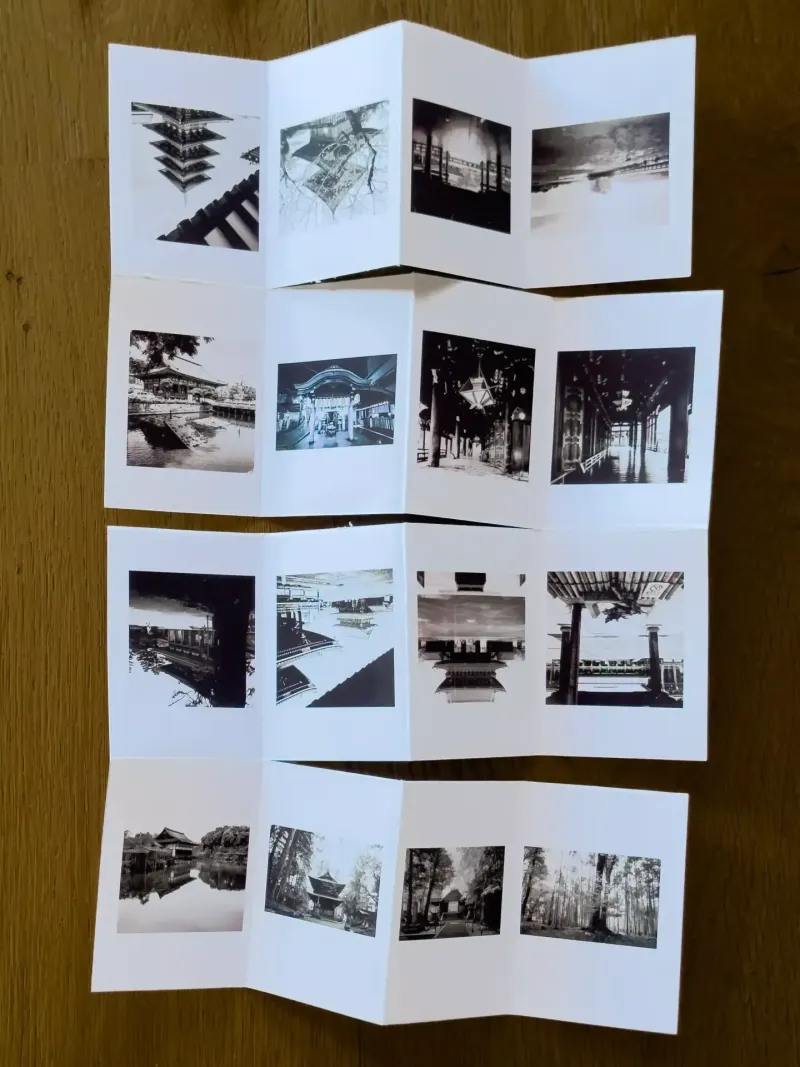
Photo: handmade zine pages spread on wooden desk with photocopied art, via i.pinimg.com
For six years, my portfolio lived at a URL. Clean grid, white space, hover states. I'd spent an entire January rebuilding it in a trendy framework, the way you do, and by February it was already quietly outdated. Worse than outdated — it was invisible. The work was technically available to everyone, which meant it was genuinely special to no one.
So last spring I did something that made my business-savvy friend wince: I stopped sending the link. Instead, I made a zine.
The Format Forced the Edit
The rules were simple. Twenty-eight pages, black and white on the inside, a risograph-ish cover in one loud color, an edition of 150. No ISBN, no barcode, no landing page. If you wanted to see what I'd been making for the last three years, you needed a physical copy, and there were only 150 of them.
Sitting down to lay it out was the first gift. A website tempts you to upload everything because storage is free. Paper is not free. Every spread cost me something, so I cut ruthlessly. Twelve projects made the final book. I wrote a sentence or two of context for each — not the stiff case-study voice, but actual sentences, like I was talking to somebody at a coffee shop in Columbus.
The zine looked like what it was: a person's hand, making choices. My website had looked like a template, because it was one.
What It Actually Cost
Let's do the math, because I promised myself I'd be honest about money on this site. Printing 150 copies at a local shop in town ran me about $340, including the color covers and saddle-stitching. Add roughly $60 for nice paper stock on the covers and another $75 in postage for the ones I mailed. Call it $475 all in.
Compare that to the $1,200 I'd dropped the previous year on the website rebuild plus hosting, and suddenly the analog route looked less like a romantic gesture and more like a budget line.
I priced the zine at $12, not free. Free invites browsers; twelve dollars invites readers. I sold through the run in about seven weeks, mostly through Instagram stories, a table at a small press fair in Chicago, and handing copies to people at openings.
The Inquiries Changed Texture
Here's the part I did not expect. Within a month, the emails coming in were different.
When my portfolio was a link, anyone could forward it. I got a lot of messages that started with "a friend passed this along" and ended with "what do you charge for a quick logo?" After the zine, people who reached out had held the thing. They'd flipped the pages. One creative director in Portland told me she kept it on her desk for three weeks before calling.
Scarcity did the filtering for me. Someone willing to track down a stapled artifact of your practice is someone who's already halfway to respecting it. The haggling dropped off. The "can you do it for exposure" messages mostly stopped — not entirely, this is still America — but noticeably.
The Copycat Problem, Solved by Staples
The other quiet win: the zine was harder to steal. My old site got scraped regularly — I'd find my layouts and even my project descriptions on other people's pages. A limited physical edition can't be right-clicked. Sure, someone could scan it, but the grain of the photocopy, the misregistration on the cover, the smell of the ink — that stuff doesn't survive a scanner, and it can't be faked either.
Do I Miss the Website?
A little. There are clients who need a URL, and I keep a bare-bones archive page alive for exactly that — think of it as the filing cabinet, not the storefront. But the zine is the thing I lead with now, and edition two is already in layout.
If you're a creative whose work feels diluted by its own accessibility, try this: make something small, make only a few, and make people hold it. Paper has a way of telling you who's actually paying attention.